Past Event
An Introduction to Agent Harnesses
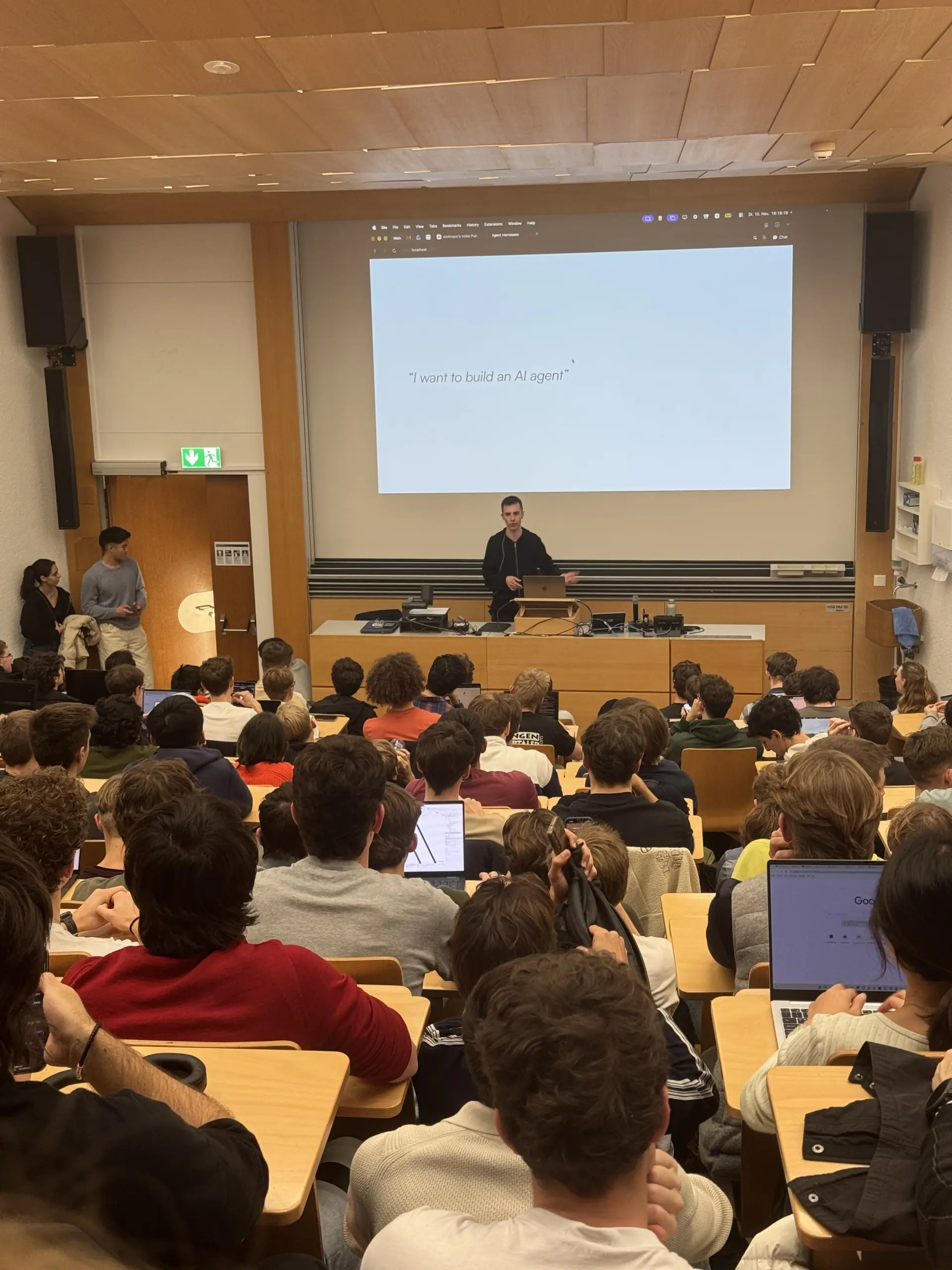
How do coding agents like Claude Code actually work? In this follow-up lecture, Fabian Rohlik built an agent harness live from an empty Python file, then took apart what personal assistants like OpenClaw and Hermes really are.
November 10, 2026 • 18:15ETH HG D 7.1
- Harness built live from scratch
- Recording & slides available
- No prior knowledge required
A follow-up to our Introductory Lecture on Claude Code in May. Where that session showed how to use tools like Claude Code, Codex, and Cursor, this one went behind the scenes to build an intuition for how they work.
Any AI product can be seen as three layers: the interface you interact with, the model that only turns text into text, and the harness in between. The harness is what makes a model agentic. It runs the loop, executes tool calls, manages context, and orchestrates everything around the model.
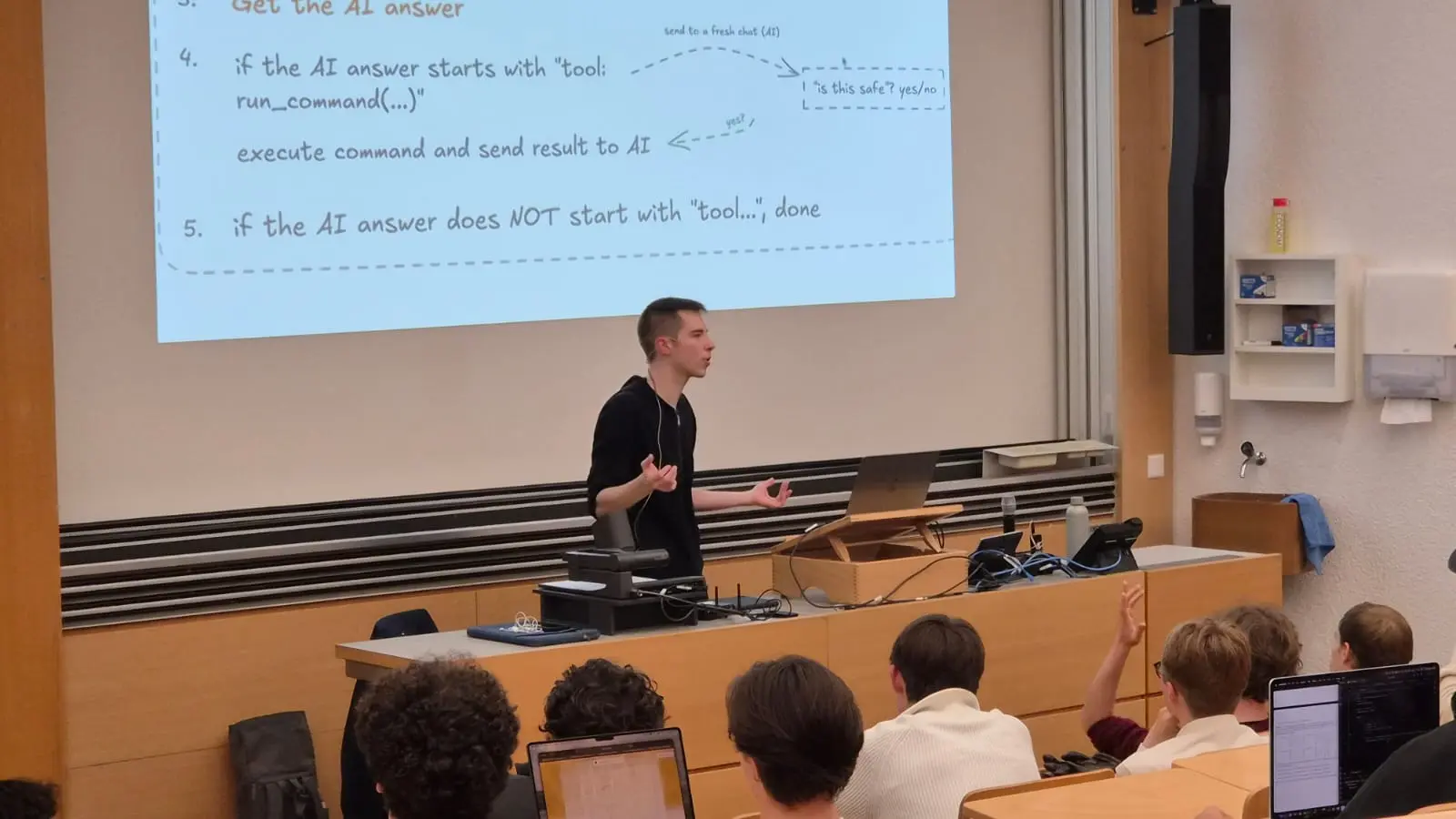
Starting from an empty Python file, Fabian built a harness live: first a single LLM call, then an agent loop, then a tool that can run commands, and finally a safety check before anything gets executed. The result could edit files on the computer, roughly the core of what Claude Code does.
The last part covered memory: giving the agent Markdown files it can write to, loading some of them into every conversation (much like CLAUDE.md), and letting the agent tidy up its memory in the background after many runs, sometimes called “dreaming”. Along the way, the session took apart what personal assistants like OpenClaw and Hermes actually are.
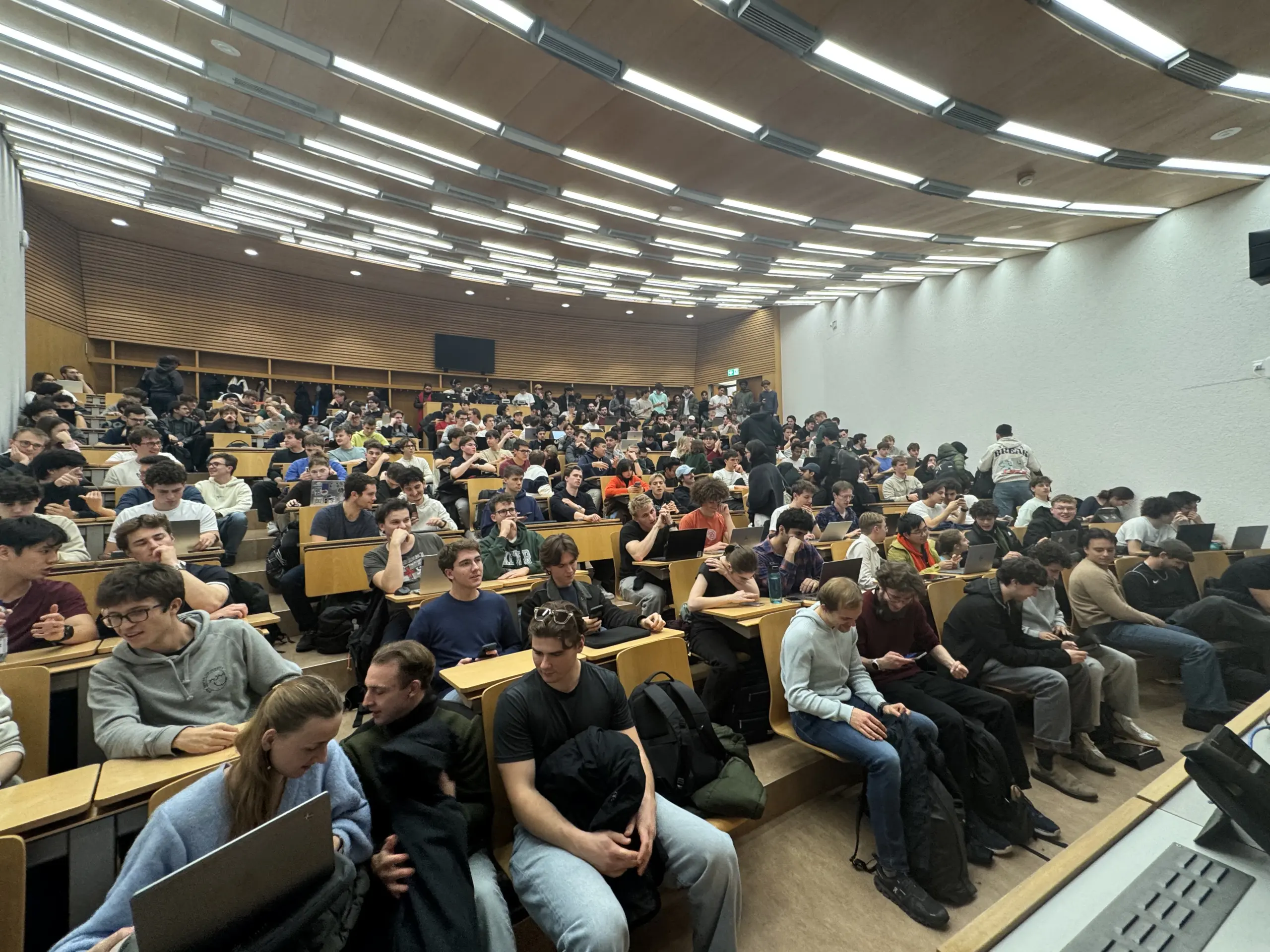
The audience was a mix of people who had never written code and computer scientists new to AI. The full recording and the slides are linked above.